Cases, Articles & Press

The following is a list of some verdicts and settlements obtained by the attorneys in the Rosen Law Firm. The results are listed only as representative of the types of cases the law firm has experience handling. These results should not be considered as a description or characterization of the quality of the firm's work and in no way should be interpreted as a guarantee of a specific result for a potential case. The value of every case is determined based on specific factual and legal circumstances. In many cases, the amount of the recovery depends on the amount of available insurance coverage. Also, there may be legal restrictions on how much someone can recover even when they have sustained severe injuries. For example, there may be a limit or cap imposed by law on the amount a person can recover in certain types of cases or against certain defendants. The Rosen Law Firm is proud of the results that our lawyers have achieved, but prior results should not and cannot be relied on to create any expectation about what can be recovered for a client in a subsequent case.

CASES AND ARTICLES

Rosen Law Firm, LLC
Charleston, South Carolina


Susan C. Rosen Named Best Lawyers' 2011 Charleston, SC Medical Malpractice Lawyer of the Year

Charleston, SC - Best Lawyers®, one of the oldest and most respected peer-review publications in the legal profession, has named Susan Corner Rosen as the "Charleston, SC Best Lawyers Medical Malpractice Lawyer of the Year" for 2011.

After more than a quarter of a century in publication, Best Lawyers is designating "Lawyers of the Year" in high-profile legal specialties in large legal communities. Only a single lawyer in each specialty in each community is being honored as the "Lawyer of the Year."

Best Lawyers compiles its lists of outstanding attorneys by conducting exhaustive peer-review surveys in which thousands of leading lawyers confidentially evaluate their professional peers. The current, 17th edition of The Best Lawyers in America (2011) is based on more than 3.1 million detailed evaluations of lawyers by other lawyers.

The lawyers being honored as "Lawyers of the Year" have received particularly high ratings in our surveys by earning a high level of respect among their peers for their abilities, professionalism, and integrity.

Steven Naifeh, President of Best Lawyers, says, "We continue to believe - as we have believed for more than 25 years - that recognition by one's peers is the most meaningful form of praise in the legal profession. We would like to congratulate Susan C. Rosen on being selected as the 'Charleston, SC Best Lawyers Medical Malpractice Lawyer of the Year' for 2011."


C-SPAN's Book TV and American History Television features Charleston as 2011 "LCV Cities Tour" comes to town

C-SPAN is visiting Charleston for a week starting June 27, 2011. C-SPAN producers will visit various literary and historic sites, interviewing local historians, authors and civic leaders, including a Tuesday, June 28 event at the Charleston Library Society (164 King Street, Charleston, SC) on the history of Charleston with author and historian Robert Rosen. Beginning at 5:45pm with opening remarks by C-SPAN President Susan Swain, Mr. Rosen will discuss South Carolina's secession from the Union. For more information, click here.


A Motorcycle Helmet: Use It or Lose It?

The National Transportation Safety Board (NTSB) recently issued a press release putting mandatory motorcycle helmet use on its Most Wanted List of Transportation Safety Improvements.

It reported that from 1997 through 2008, the number of motorcycle fatalities more than doubled during a period when overall highway fatalities declined

The NTSB has recommended that everyone riding a motorcycle be required to wear a helmet. Currently, only 20 states, the District of Columbia and four territories have universal helmet laws that apply to all riders.

Twenty-seven states have partial laws that require minors and/or passengers to wear helmets. Three states - Iowa, Illinois and New Hampshire - have no helmet laws.

South Carolina Helmet Law

South Carolina law requires anyone under the age of twenty-one to wear an approved protective helmet when either operating or riding as a passenger on a motorcycle or two-wheeled motorized vehicle. S.C. Code Ann. §§ 56-5-3660 (2010)

  • "It shall be unlawful for any person under the age of twenty-one to operate or ride upon a two-wheeled motorized vehicle unless he wears a protective helmet of a type approved by the Department of Public Safety.
  • Such a helmet must be equipped with either a neck or chin strap and be reflectorized on both sides thereof."

City of Myrtle Beach Helmet Law Ruled Unconstitutional

In 1988, the City of Myrtle Beach passed an ordinance requiring the use of helmets when using motorcycles. However, the South Carolina Supreme Court struck down the ordinance last year ruling that the City cannot mandate the protective gear in the absence of a state law.

The Myrtle Beach City Council adopted the ordinance in 2008 after years of complaints from residents about noise, lewd behavior and congestion along the 60-mile Grand Strand, and the helmet ban had an almost immediate effect: rallies saw double-digit percentage drops in attendance last spring.

The Court found that "the City Helmet Ordinance fail[ed] under implied field preemption due to the need for statewide uniformity and therefore issue[d] a declaratory judgment invalidating the ordinance." Individual cities each making distinctive rules on helmets and eyewear would lead to chaos for motorcycle riders. Aakjer v. City of Myrtle Beach, 388 S.C. 129, 694 S.E.2d 213, 2010 S.C. LEXIS 206 (S.C. 2010)

The Sad Truth

The NTSB issued an alert with the sobering statistics:

  • Deaths from motorcycle crashes had more than doubled in the past decade - from 2,294 in 1998 to 5,290 in 2008 - Another 96,000 people were injured in motorcycle crashes in 2008.
  • Head injuries are a leading cause of death in motorcycle crashes.
  • Motorcyclists who crash without a helmet are three times more likely to have brain injuries than those wearing a helmet.
  • In addition to the tragic loss of life, the economic cost to society is enormous. In 2005, motorcyclists without helmets were involved in 36 percent of all motorcycle crashes, but represented 70 percent of the total cost of all motorcycle crashes - $12.2 billion.

Most surprising is the fact that in 1975, 47 states had mandatory helmet laws. Because of a change in federal law, by 1980, 27 states had repealed their laws.

Motorcycle rights advocates have pushed a well-orchestrated campaign of "Freedom to Ride," but their freedom comes at a high price. Medical costs for unhelmeted riders involved in crashes, according to the NTSB, are "staggering, estimated at $310,000 per crash-involved motorcyclist."

Wear A Helmet

The NTSB's overall guidance is that helmets are very effective at reducing risk of dying in a crash by 37%. They also reduce the need for ambulance service, hospitalization, intensive care, rehabilitation and long-term care that results from motorcycle crashes.

Moreover, it points out that helmets do not increase the likelihood of other injures. While many bikers want the "freedom to ride," the resulting brain injuries, bodily injuries, and deaths make others, including friends and family members, question the wisdom of the law. Is the freedom to ride without a helmet worth the freedom for a motorcycle crash victim to spend a lifetime as a quadriplegic, in a coma, or in the worst cases, to have the freedom to die?

Sources:

http://www.ntsb.gov/Pressrel/2010/101116.html
http://www.ntsb.gov/alerts/sa_012.pdf


The Backdrop to a Great Debate Concerning the Trucking Industry

The Federal Motor Carrier Safety Administration ("FMCSA") is very busy these days, as it considers implementing changes to the hours-of-safety ("HOS") rules governing the driving times and rest periods of drivers of commercial motor vehicles.

This consideration has been long in coming. The present HOS rules, instituted during the Bush administration, made material changes to laws that had existed essentially untouched for decades. The rules increased the hours truckers may drive consecutively (from 10 to 11) and decreased from 50 to 34 hours the time required for a driver to be off duty after reaching a prescribed driving limit within a seven- or eight-day period. The HOS rules also contain a sleeper-berth provision mandating that a driver opting to rest in his or her truck spend at least eight consecutive hours in the sleeper berth, plus an additional two hours in the berth, off duty, or in some combination of the two.

There have been repeated legal challenges to the rules in recent years by safety and labor advocates who claim the HOS provisions adversely affect drivers' health and increase roadway accidents, and the FMSCA settled a third lawsuit with plaintiffs in October 2009. The case has been stayed pending the FMSCA's review and reconsideration of the rules. This process has involved soliciting the views of all interested parties in a series of public hearings over the past several months.

The stakes are high. It is widely viewed that the Obama administration favors a tightening of the rules and will be closely examining evidence showing any demonstrated impact the rules have had on safety since the HOS provisions changed in 2003.

The trucking industry and other supporters of the relaxed provisions welcome the scrutiny, maintaining that the rules have actually promoted safety by reducing crashes and decreasing both injuries and fatalities. The American Trucking Association ("ATA") contends that a return to shorter driving times will not improve safety; moreover, it would be economically detrimental to an important industry and its workers.

Statistics on the FMCSA website support the ATA's safety assertions. Both bodies rely heavily on a recent study completed by the American Transportation Research Institute (ATRI) that compares 2009 safety data to 2004 data. A look at this study is informative.

The ATRI Hours-of-Service Rules Safety Impacts 2010 Analysis

ATRI's latest study is part of a more comprehensive HOS rules analysis that the Institute initially undertook in 2004, which has been cited by FMCSA. The 2010 report – which was commissioned by ATA – examines the safety impact of the HOS rules on the commercial trucking industry. The study solicited 2009 safety and driving-time information from approximately 260 commercial carrier companies and more than 127,000 drivers.

The most noteworthy commercial vehicle findings, comparing 2009 to 2004, are these:

  • Total collisions per million miles decreased 11.7 percent
  • Total driver injuries decreased 1.6 percent, a "statistically significant" number
  • The great majority (87 percent) of collisions occurred within the first eight hours of driving
  • Only one percent of collisions occurred after 11 hours of driving

These statistics facially and strongly support the ATA's stance that the present HOS rules have improved trucking safety and that an increased allowance in driving hours has had a negligible effect on accidents. In step with their conclusion is this recent input from the U.S. Department of Transportation: According to DOT, fatalities from truck accidents declined 12.3 percent in 2008 from 2007, the largest drop in one year ever recorded, with 2008 also marking the fifth consecutive year that trucking-related deaths have dropped.

The Sleeper-Berth Issue

This matter was not considered in the ATRI study, but has been raised repeatedly by the ATA and truckers of affiliates and member companies, who strongly urge a modification to the sleeper-berth provision in FMCSA's HOS regulation.

The argument goes like this: Requiring all truckers to adhere to the same rigid sleeping regimen in their berths is non-sensical and, often, counterproductive. It completely ignores a host of differentiating factors among drivers and, rather than promoting safety, actually increases highway danger.

Proponents of change say that it needs to be more flexible, taking into account that truckers' body clocks are not easily synchronized with a hard-and-fast sleep rule. The ATA states that a better FMCSA focus would be on the following:

  • Training and screening related to sleep-disorder awareness
  • Promoting fatigue risk management programs
  • Evaluating fatigue-detection devices
  • Increasing the availability of truck parking on busy roadways
  • Developing processes that better inform drivers of parking locations

The Road Ahead for HOS Rule Reconsideration

Public comment on the HOS rules recently came to a close, with the last of five listening sessions held in various locations across the country. The next step in the rulemaking process will be FMSCA's issuance of a notice of proposed rulemaking followed by a final rule being published within a year after that.

The outcome is important to many, as evidenced by a public debate that has featured impassioned advocacy from interest groups spanning a wide spectrum of American society. Supporters of the present rules and those seeking change will both be watching closely as the time nears for the FMCSA to act.

Sources:

http://www.fmcsa.dot.gov/rules-regulations/topics/hos/
http://www.atri-online.org/ATRI_HOS_Analysis_2010.pdf
http://www.etrucker.com/apps/news/article.asp?id=85068


One of South Carolina's Largest Verdicts for Medical Malpractice ($7 Million awarded by the jury reduced to $3.5 Million due to Plaintiff's contributory negligence)

The South Carolina Court of Appeals affirmed a $3.5 million verdict (reduced from $7 Million awarded by the jury) in a medical malpractice case in Greenville County, yesterday. Susan Rosen represented Yolanda Burroughs and the estate of James Burroughs in a suit against Dr. John W. Worsham and Fairview Family Practice for medical malpractice arising out of Dr. Worsham's failure to diagnose and treat Yolanda's husband, James, who suffered and subsequently died from colon cancer. The jury awarded a total of $7 million, $3.5 million for the survival claim and $3.5 million for the wrongful death claim. However, the jury also found Mr. Burroughs 50 percent at fault for failing to follow up when recommended by his doctor. Therefore, the verdict was reduced to $3.5 million due to comparative negligence.

"Nothing can bring Mr. Burroughs back, but this will bring some monetary relief to Yolanda Burroughs and her two children, providing them with the income that Mr. Burroughs would have earned," said Susan Rosen, who represented the Burroughs family. "Mrs. Burroughs and her two young children have suffered through Mr. Burroughs' illness, his death, and the litigation process. They lost a loving husband, a devoted father, and a wonderful man." After receiving a bachelor's degree, master's degree, and doctorate in theology, Mr. Burroughs served as a missionary in Mexico, where he met and married Yolanda. The couple moved back to the United States and eventually settled in Greenville where they were raising their two children.

While residing in Greenville, Mr. Burroughs was a patient at Fairview Family Practice fr. On numerous occasions in 1996, Mr. Burroughs sought treatment with Dr. Worsham, complaining of abdominal pain and suffering from chronic anemia. At one point, Mr. Burroughs was described by his doctor as having "a deep seeded [sic] fear of either prostrate or stomach cancer"... and was diagnosed with "cancer phobia." Despite his complaints, testing was not done to diagnose his colon cancer, and his condition went untreated. Mr. Burroughs, still suffering from abdominal pain and anemia, again sought treatment at Fairview Family Practice. Ulcer medication was prescribed. Two weeks later, Mr. Burroughs, a Management Information Systems Manager, was promoted by Hyatt Corporation and transferred to the corporate headquarters in Chicago. Mr. Burroughs sought treatment in Illinois where he was diagnosed with colon cancer. Unfortunately, his colon cancer had spread throughout the abdomen and was incurable.

The Burroughs family returned to Ware Shoals, South Carolina, in early 1998. Mr. Burroughs and his wife brought suit against Dr. Worsham and Fairview Family Practice alleging negligence in the failure to perform the proper tests to diagnose and treat her husband's condition. After Mr. Burroughs died, Mrs. Burroughs continued the suit which was eventually tried before a jury i. The jury's verdict was appealed by the doctor and his medical practice. In March of 2002, the Court of Appeals affirmed the verdict.


Medical Malpractice Verdict

Susan Rosen obtained a $566,263.69 verdict from a Greenwood, South Carolina, jury in a medical malpractice case against a physician who failed to properly diagnose and treat a perforated colon in a woman who had undergone surgery to remove her ovaries. After a week of trial, the jury returned the verdict against a local doctor who had performed surgery.


Verdict of Over a Million Dollars for Negligence and Breach of Contract

Representing an Horry County company in a negligence and breach of contract claim, Susan Rosen obtained a verdict in excess of $1,000,000 for the plaintiff company against a company that improperly installed, maintained and inspected the product installed in the restaurant.


Four Million Dollar Settlement in Birth Injury Case

Susan Rosen receives a $4,000,000 settlement for child who was born with severe injuries caused by the failure of the physicians and hospital to perform an emergency cesarean delivery. The failure to properly treat the newborn caused injuries which resulted in cerebral palsy.


Attorney Susan Corner Rosen Named to Million Dollar Advocates Forum
Santa Cruz, California

The Million Dollar Advocates Forum is pleased to announce that attorney Susan Corner Rosen of Charleston, SC has been certified as a member.

The Million Dollar Advocates Forum is recognized as the most prestigious group of trial lawyers in the United States. Membership is limited to attorneys who have won million and multi-million dollar cases. Forum membership acknowledges proven experience and excellence in advocacy, and provides members with a national network of experienced colleagues. There are approximately 2000 members throughout the United States (and several members in Canada and England).

Ms. Rosen is a graduate of Suffolk University Law School, and specializes in medical malpractice and personal injury law.


Susan C. Rosen to Chair National Committee
February 28, 2003
Charleston, S.C.

Susan C. Rosen, of Rosen, Rosen & Hagood, LLC has been named Co-Chair of the Committee on Ethical Conduct for the Association of Trial Lawyers of America (ATLA).

Based in Washington, D.C., ATLA is a nonprofit association of more than 56,000 trial lawyers and other legal professionals, which offers a variety of services including legal research, public relations, education, and legislative support.

As the Co-Chair of the committee, Rosen will oversee and administer the disciplinary procedures involving ATLA members.

Susan C. Rosen is rated AV as designated by Martindale-Hubbell, which signifies the highest possible ranking for legal ability and ethics, as judged by one's peers in the legal profession.


Susan C. Rosen Appointed to National Legal Caucus
Charleston, S.C.

Charleston attorney Susan C. Rosen, was appointed as South Carolina liaison to the Association of Trial Lawyers of America (ATLA) Women Trial Lawyers Caucus for a one-year term. Based in Washington, D.C., ATLA is a nonprofit association of more than 56,000 trial lawyers and other legal professionals, which offers a variety of services including legal research, public relations, education, and legislative support.

The Women Trial Lawyers Caucus is a group of female ATLA members who are dedicated to increasing female membership and participation in ATLA and to developing and overseeing programs of interest to its female members.


Race debate clouds Charleston school admissions
Lawsuits lead county board to reconsider systems at Buist, Ashley River magnets

BY ALLISON L. BRUCE
Of The Post and Courier Staff

Whether or not they ever go to court, the systems of race-based admissions at two Charleston County schools may be nearing their last days.

Admissions at Buist Academy and Ashley River Creative Arts Elementary School both involve using minority and non-minority lists to ensure a 60 percent white, 40 percent minority racial balance. Both schools have been targeted by recent lawsuits because they use race in admissions.

The suits — and perhaps two recent court decisions on race-based admissions (see story, Page 8A) — have driven Charleston County School Board members to reconsider how the magnet schools admit students and whether there is a better way.

Some argue that racial balancing in schools is still the best way to overcome past inequities and that the schools, created at a time when districts were wrestling with how to provide an equal footing for students of all races, have achieved successful integration in ways other schools have not.

But those arguments are increasingly being challenged by those advocating a colorblind society. The attorney who filed the suits, former school board member Larry Kobrovsky, plans to ask a judge in the next two weeks to rule against the admissions processes based on information he has collected.

The main point of Kobrovsky's suit is that students should not have to be categorized by race to gain admission to a public school.

"Everybody accepts that a neighborhood public school can't deny people entrance based on ancestry," Kobrovsky said. "Why should they be able to do it indirectly?"

But a simple committee meeting, with a simple recommendation for change, could head off the suits. The committee is expected to meet soon, said board Chairman Gregg Meyers.

He foresees "some recommendation to the board about an adjustment to the admissions criteria to enable us to keep a diverse school without using race as a filter."

"I don't know if the court would compel us to change it," Meyers said. "The hope is that we can put ourselves on a very firm legal ground. We're now on ground that can be argued about."

Meyers is no stranger to the admissions processes at both Buist and Ashley River — he was an attorney with the U.S. Justice Department who was in negotiations with the district when the schools were created.

MAKING HISTORY
Attorney Robert Rosen represented the school district about 20 years ago when a Justice Department suit was pending over integration in Charleston County.

At the time, Rosen said, some board members wanted to settle the suit, and others wanted to fight it. Even with that board division, a committee was formed that worked with the Justice Department on steps toward a settlement. One of the ideas that came out of those discussions was the creation of magnet schools.


Gov.'s history lesson: From Ataturk to attaboy
Letter to the Editor
BY ROBERT N. ROSEN

Gov. Mark Sanford got himself in historical hot water (in this case, a Turkish bath) by praising Mustafa Kemal Ataturk, the founder of modern Turkey. Or maybe it was a turkey shoot. Anyway, why did he pick Ataturk, someone virtually unknown to his fellow South Carolinians? He was looking, he said, "for an example of someone who effected a tremendous degree of structural reform to the benefit of his country." Ataturk was apparently far enough away geographically and chronologically (early 20th century) that few would know much about him. Faraway structural reform sounds good.

But it turned out (at least according to some authorities) that Ataturk's "tremendous structural reform" was accompanied by genocide, namely the killing of millions of Greek and Armenian Christians. Indeed when looking for earlier parallels to the Holocaust, many historians of that event cite the Turkish massacre of Armenians as the closest historical example. According to Yehuda Bauer, a distinguished Holocaust scholar, a higher percentage of Armenians were killed (probably one-half) than Jews in the Holocaust (one-third of world Jewry). And to make matters still worse (to those who believe the killings occurred), the Turks, unlike the Germans, deny to this day that the genocide happened. A recent letter to the editor of The Post and Courier said, "The Greek and Armenian lobby was distorting history."

The governor manfully apologized to anyone he may have offended, thereby moving on from Ataturk to attaboy.

Gov. Sanford picked a bad one, but historical examples are useful because they can vividly illustrate a point, and the "lessons of history" are sometimes quite important. For example, giving in to Hitler at Munich is an important lesson of history that President George W. Bush must have learned at Andover and Yale even if he made a "C." Al Gore missed that lesson at Harvard even with an "A." History, however, can help the speaker only if his audience knows something about the past events.

I am not sure what Gov. Sanford was trying to illustrate in looking for an example of "a tremendous degree of structural reform," but the lessons of history do not necessarily help him. Truly "tremendous" degrees of structural reform are not very appealing: Nazism under Hitler, Fascism under Mussolini, Communism under Stalin and Mao are all examples of "tremendous structural reform."

I know that Gov. Sanford meant something positive. But he did not have to look to Turkey in 1906 for an illustration. Structural reform in our history would certainly include adoption of the Constitution in the 1780s, Teddy Roosevelt's and Woodrow Wilson's economic reforms, FDR's New Deal, and the Civil Rights Revolution. Unlike the Ataturk example, these structural reforms were not accompanied by massacres and genocide. They were accomplished in the American way - through reasonable and democratic means. They may not have been as exciting as Ataturk in Turkey, but exciting history is usually accomplished by great suffering. My advice to our new governor: There is no place like home. General Moultrie and his men made a major structural change in 1776 in your backyard on Sullivan's Island.


Memorial span over the Ashley a bridge to past heroes

BY ROBERT N. ROSEN

On July 4th, we properly remember the sacrifices made by the patriots of the American Revolution in the 1770s and 1780s. We remember Lexington, Concord, Sullivan's Island and Cowpens. But it is also a fitting time to remember others who sacrificed for our nation's 227 years of independence and freedom.

On May 5, 1926, the people of South Carolina and the citizens of Charleston dedicated the Ashley River Memorial Bridge, what we now know as "the old Ashley River Bridge." The News and Courier called it the "widest and handsomest bridge in the South." Plaques were placed on both sides of the bridge (traffic obviously went both ways), which are still there and read as follows:

Ashley River Memorial Bridge

Fed. Aid Project 215

Dec. 1925

A tribute to those

South Carolinians who

gave their lives in

the World War

What better memorial could there have been in 1926 to the South Carolinians who died in "the Great War," the war we now call World War I, than to name this impressive new bridge for them? There were no other bridges over the Ashley or Cooper Rivers in 1926, and South Carolinians had enthusiastically supported the war. Indeed a half century after the Civil War and as a result of World War I, white South Carolinians again began to celebrate the Fourth of July. Many South Carolinians saw action in France, including the 30th (Old Hickory) Division, the 81st (Wildcat) and the 371st Regiment, 93rd (Negro) division. The Charleston Navy Yard hummed with activity and became the headquarters of the Sixth Naval District. A naval training camp was established nearby. (A young Norman Rockwell was stationed there and drew illustrations for the camp newspaper.)

Time has not been kind to the Ashley River Memorial Bridge. It is hardly the "widest and handsomest bridge in the South" today. The weathered plaques are all but invisible to busy motorists heading west of the Ashley. So at the request of the Arts and History Commission of the city of Charleston, the S.C. Department of Transportation has recently put up a modern, readable green sign informing motorists that the bridge was in fact dedicated to the memory of those who served in World War I.

Does the Ashley River Memorial Bridge mean anything to us on this July 4th? Today, World War I seems far away indeed. But it is not. It was a war that began with a terrorist attack and an assassination. It was a war that pitted an autocratic Germany and Austrian-Hungarian Empire against the Western democracies, a war the United States entered after German U-boats sank the Lusitania, killing 128 Americans; and after Germany urged Mexico to make war on the United States and sank unarmed American merchant ships.

Southerners supported the war effort from the start. They were its most ardent supporters. They were never confused by the prevailing fashion for pacifism and isolationism, nor by pro-German and anti-British propaganda. Great Britain and France, freedom-loving countries admired by most Southerners, were in danger. Germany was trying to control the Atlantic Ocean. That was all they needed to know. As in all wars, Southerners were ready to fight. They supported their President, Woodrow Wilson, a Southerner raised in Columbia, S.C., Augusta, Ga., and Virginia. "The South is clearly in the saddle," Col. Edward M. House, Wilson's closest confidant, said. Southern editors described the war as a "life and death struggle between democratic government and Prussian autocracy." In April 1917, Wilson asked Congress for a declaration of war. "The world must be made safe for democracy," he told the American people. "It is a fearful thing to lead this great peaceful people to war. ... But the right is more precious than peace. ..."

Because of the war, Southerners rejoined the Union in their hearts. On July 4, 1917, Congressman Robert L. Doughton of North Carolina was moved by "the grandsons of the men who wore the blue and the grandsons of the men who wore the gray... marching with locked shields and martial step. ..." Southerners were once again a part of the nation. "With the war in 1914-1918," one Southern writer recalled, "the South re-entered the world." They fought and died to save Belgium, France, Great Britain and the United States from the first German assault on freedom-loving countries.

It is only natural to take a beat-up bridge built in 1926 for granted. But a memorial to those who died to make the world safe for democracy is worth thinking about as we drive across the Ashley River.


Arbitration: Not always a class act
Gene Reed Toyota defeats bid by plaintiffs to form a class

BY MICHAEL BUETTNER
Of The Post and Courier Staff

Earlier this year, the U.S. Supreme Court handed down a decision in a South Carolina case that consumer advocates celebrated as a victory against the increasingly widespread practice of businesses requiring customers to sign binding arbitration agreements in case of legal disputes.

In the case against loan company Green Tree Financial, the plaintiffs' lawyers were successful in obtaining class-wide arbitration for their clients. It's not as favorable a result as being allowed to proceed with a class-action lawsuit, but better for their clients than being forced to arbitrate their claims separately. The court's ruling gave consumer advocates hope.

Yet in a more recent local case, which found two of the plaintiffs' lawyers from the Green Tree case on opposite sides, a judge denied class-arbitration status and sent the plaintiffs back to work out their disputes individually.

Mary Leigh Arnold, a Mount Pleasant attorney, represented some of the plaintiffs in the Green Tree case. She also represented two plaintiffs who filed a lawsuit in March 2001 alleging deceptive sales tactics against Gene Reed Toyota of North Charleston -- allegations that the car dealership "categorically denied," said the company's attorney, Susan C. Rosen of Charleston firm of Rosen Rosen & Hagood. Also helping Gene Reed fight the lawsuit was Steven W. Hamm, former head of the South Carolina Department of Consumer Affairs and now an attorney in Columbia. Hamm had represented some of the plaintiffs in the Green Tree case. His involvement with the defense in the Gene Reed case, Hamm said, was not at all inconsistent with his participation on the plaintiffs' side in Green Tree.

"It was my position all along that (the Gene Reed case) was not suitable for class certification," he said.

"The question was, 'Forget Green Tree -- can this case stand on its own as a class action?' It was not a case that could be certified as a class."

That line of reasoning prevailed in the Gene Reed case, with the courts ruling that the plaintiffs could pursue neither a class-action lawsuit nor a class arbitration, forcing them to pursue their claims separately. The case illustrates why so many businesses favor arbitration agreements because of the expense of litigation, according to Gene Reed, the company's president. "I didn't want to settle the case," he said. "The problem is that we have insurance, and there is a point in time when the insurance company forces you to settle. In this case, the legal fees the insurance company paid were in excess of $100,000."

A settlement in the case is pending; details of its terms were unavailable. Reed noted that he decided to settle despite the fact that "we vigorously defended ourselves against all of the allegations, and we prevailed on every one."


Summerville fire official disciplined
Rodney Profit faces insubordination, harassment charges

BY BO PETERSEN
Of The Post and Courier Staff

SUMMERVILLE--Assistant Fire Chief Rodney Profit has been disciplined but not fired after two allegations of sexual harassment and a charge of insubordination were made against him, the town administrator said.

But in keeping with a strict confidentiality approach taken throughout the two-month investigation of the incidents, Administrator Mark Williams wouldn't say what discipline had been taken or identify Profit as the employee investigated.

Two town officials and Profit's former attorney confirmed earlier that council meetings on the matter concerned him.

"We think it was the right decision not to terminate him. We still don't agree with the disciplining, but it was a much better solution than termination," said Chris Potts, Profit's attorney.

Fire Chief Robert Brown made the decision in consultation with Williams, said town attorney Troy Knight.

Both Knight and Williams said they had not heard from an attorney for any person involved in the harassment allegations since the decision was made.

The handling of the incidents occupied Town Council over four closed sessions in a month, including a Nov. 10 meeting that included Charleston labor attorney Susan Rosen. The decision was made after an outside investigation by Rosen, Knight said.

Earlier council discussion of the allegations concerned a comment made to an off-duty female firefighter and a hug.

Profit is an 18-year department veteran.

The incidents came to light three years after a U.S. Justice Department probe into how the Summerville Fire Department treated women and in the wake of what Knight described as a safety net of programs and policies put into place to prevent harassment.

The Justice Department recommended policy improvements but took no legal action.


The Jewish Confederates - Book Review
Civil War History, By Robert N. Rosen.

KENT A. McCONNELL
Dartmouth College

As an effort in chronicling Southern Jewry during the Civil War era, Robert Rosen's work is impressive in scope and deserves mention in any book list concerning religion and the American Civil War. The Jewish Confederates intimately chronicles the lives of religious communities in such geographically distant places as Richmond, Virginia, and New Orleans, Louisiana. In highlighting the experience of the war among these local Jewish inhabitants, Rosen offers his audience a brief glimpse into Southern Jewish life during America's struggle as a "House Divided"--a metaphor with particular resonance among American Jews. The work highlights well-known historical actors such as Secretary of War Judah P. Benjamin, Phoebe Yates Pember, Col. Abraham Charles Myers, Maj. Alexander Hart, and Maj. Adolph Proskauer. Other lesser-known but equally interesting figures such as the Myers family of Richmond, Reverend George Jacobs, and Lewis Leon are among the cast of characters depicted in Rosen's thorough text. For this Herculean effort in research and literary detail, scholars and students of the Civil War are indebted to Rosen for bringing to their attention an important, but all-too-often forgotten element of the Confederacy. Yet, at the same time, for all The Jewish Confederates offers its audience in terms of its expansiveness, it also lacks the in-depth analysis of Jewish life in the Confederacy that such a subject deserves. While occasionally over-reliant upon secondary sources to forward the historical narrative, Rosen's quest for breadth oftentimes leads the narrative astray, piecing together often interesting vignettes of Jewish life without the necessary interpretative framework to make the text a solid piece of historical research. This keen interest on the personal lives of Jews leads the author to simplify the relationship between Southern Jews and the Confederate cause. What's more, such simplification seems to have led to contradictory claims. For example, the author asserts, "Southern Jewry was an integral part of the Confederate States of America." After making this weighty claim, however, the author fails to substantiate it in any detail. What follows are pages about Jewish immigration and settlement, along with numerous biographical descriptions of prominent Jewish families in the South prior to or on the eve of war. What the author fails to explain is how these Southern Jews became Confederates.

Other subjects such as anti-Semitism in the South and Jewish allegiances to the Confederate cause also receive only cursory treatment. Such methodological pitfalls leave the audience with the impression that all Southern Jews were pro-Confederate and were so because they lived in a region far freer from anti-Semitic bigotry than their fellow Jews in the North. The extant writings of Jews from this era, however, paint a different picture. At times the author hints at such complexities-for example, in his treatment of Jewry in New Orleans the author suggests a division existed between established Jewish families and new immigrant families concerning the Confederacy during Union occupation--but never exploits these issues to paint a richer picture of Southern and Confederate Jewish life. This fiat rendering of the Jews obscures such matters as class, gender, and perhaps most importantly among American Jews, how the faith of a covenant people was breeched by political strife.

Despite these criticisms, the work is a welcomed addition to the small but growing body of literature concerning religious life and the American Civil War. While Rosen's treatment is certainly not the last word on Southern Jewry during the war, it nevertheless should be commended as an important first attempt to understand this critical subject and period of American religious life.


Magnet panel studies change to admissions

BY ALLISON L. BRUCE
Of The Post and Courier Staff

Changes in the way students are admitted to two Charleston County magnet schools appear inevitable following a committee meeting Wednesday.

At issue are the admission processes at Buist Academy downtown and Ashley River Creative Arts Elementary School in West Ashley. Both schools use race as a factor in student admissions to keep their enrollment at 60 percent white, 40 percent minority, and both are the subject of lawsuits maintaining that the processes are unconstitutional.

During a two-hour executive session, the committee, comprising principals from both schools, county school board members, constituent school board members and district officials, spoke with the district's attorneys and brainstormed ideas.

Board Chairman Gregg Meyers said each member of the committee brought a different perspective to the discussion on possible solutions.

An actual decision could be made as early as the next board meeting Jan. 27."If we get back some things that might work, I think the board would be receptive," Meyers said.

Attorney Larry Kobrovsky, who filed the suits against the district, and Buist parent Lenny Greene, a representative of Charleston County Parents for Public Schools, attended the public part of the meeting.

Greene said parents worry about Buist's future.

"They're fearing it's going to be the end of the school as far as its excellence and diversity, academics and overall balance," he said.

Alternatives that ensure diversity and are legally sound have been found in other states, and Greene hoped for the same here.

"I would like to see some quick solution to resolve this to everybody's satisfaction without litigation and remove the threat of litigation in the future," he said. Then, the district could use similar admissions requirements for future magnet schools.

Kobrovsky told the committee that during depositions taken in the Buist case, district officials acknowledged that using race in admissions would be morally and legally wrong in any other public school, and he extended that to include Buist and Ashley River.

"It is not up to us what remedy you do," he said, "but to eliminate what is clearly unconstitutional."

Though the committee would not go into details on the different admissions procedures suggested during the meeting, multiple approaches are used elsewhere.

An Arlington, Va., school district was the subject of a 1999 lawsuit over one of its magnet schools because it used race in its admissions. The courts found that the process was unconstitutional and asked the district to look at alternatives.

Today, Arlington's three magnet schools have three ways of admitting students, though all three also recruit heavily and reach out to minority communities to encourage parents from those communities to apply.

Arlington Traditional School incorporates a class of 4-year-old children through the Virginia Preschool Initiative, which is open to disadvantaged children not served by Head Start. Those children are then given the option to continue through school at Arlington. Other students are admitted through an open lottery, though siblings get priority.

At Drew Model School, students are admitted to a Montessori program by a lottery based on their family's income level. Those students can then continue through the school. Other students entering the school are admitted through an open lottery, though siblings get priority.

At H.B. Woodlawn Secondary Program, students are admitted through a lottery based on which neighborhood school they would otherwise attend. Certain slots are available for each neigh-borhood school based on the number of students at each school. An open lottery fills remaining slots.

When Greene suggested that one alternative might be to admit students under a system that looks at free and reduced lunch, often a measure of poverty, Kobrovsky countered his suggestion by saying that any plan that would aim to keep racial balancing would not be acceptable.

"If you're attempting to do indirectly what you can't do directly, we'd be right back in court," he said.

Though Kobrovsky noted it was not his call, he said the admissions process ultimately decided upon must treat all applicants equally.

"I'm not interested in a more sophisticated filter to arrive at the same result," he told the committee after its meeting.

However, if the issue can be resolved out of court, Kobrovsky told the committee he was willing to donate $1,000 to the district for an essay contest on the importance of the 14th Amendment's equal protection clause " the clause he is using to argue that the race-based admissions are unconstitutional.

"The board's hope is we can make our school available to kids in the county, and if we did that successfully, it would be a diverse school," Meyers said. "We want to achieve a certain kind of fairness without using race."

The plan is to settle the suit before it goes to a judge.

"We're hoping to resolve everything," said Robert Rosen, the attorney for the district. "We hope to come up with a plan that would suit the plaintiffs and the court."

Is South Carolina Next to Pass Texting Ban?

Article provided by Rosen Law Firm. Please visit our Web site at www.rosen-lawfirm.com

Texting Ban Up for Debate in Upcoming Year

2010 may be the year that South Carolina passes a state-wide ban on texting while driving. As of early January, state legislators had at least three bills waiting on their dockets seeking to ban texting while driving and another four regulating cell phone use.

While all of the proposed texting bills seek to ban the activity statewide for all drivers, the bills vary on the best way to accomplish this goal and how to punish violators. The most restrictive bill up for consideration is House Bill 4189, sponsored by Rep. Don Bowen (R-Anderson). If passed without changes, the bill would make texting while driving a primary offense and impose significant fines, jail time and driver's license suspension on those caught violating the law. The law also would allow the police to seize the driver's phone as evidence.

In comparison, one of the least restrictive bills would make texting while driving a secondary offense and carry a $25 fine per violation. This means drivers would have to be pulled over for another traffic violation, like speeding, before they could be ticketed for texting while driving.

Local law enforcement officials have expressed concerns about their ability to enforce a law that makes texting while driving a secondary offense.

Currently, 19 states and the District of Columbia have passed texting bans. Fifteen of these make a violation of the law a primary offense.

Danger Too Big to Ignore

In the past, some South Carolina state legislators have been reluctant to support a texting ban because it was viewed as another way for the government to regulate the activity of private citizens - an argument reminiscent of the one over mandatory seatbelt use.

However, as more and more studies have come out revealing the full extent of the dangers posed by texting while driving, the activity is compared to drinking and driving: Like drunk driving, texting while driving endangers not only the life of the driver doing the activity, but also the lives of every other driver on the road.

Moreover, some recent studies have found texting to pose an even greater risk than drunk driving. In a study released in July, 2009, by the Virginia Tech Transportation Institute, texting while driving was found to be even more dangerous than either talking on a cell phone while driving or drinking and driving.

Other studies have found:

  • Driver distraction is a contributing factor in 80 percent of all accidents and 65 percent of all near-accidents (National Highway Transportation Safety Administration)
  • Cell phone use is a contributing factor in 1.6 million motor vehicle crashes each year, with texting being responsible for 200,000 of these accidents (Focus Driven)
  • Drivers who text while driving have six times greater risk of being involved in a car crash than drivers who do not (University of Utah)

These alarming statistics have led to shift in state policies across the country since the first texting bans were passed in early 2008. In a little more than a year, nearly half of the states have passed some type of texting ban. The federal government is also considering a law that would require states to pass a texting ban in order to receive federal highway funding.

Conclusion

Driver distraction is a leading cause of auto accidents in South Carolina. Whether these drivers are distracted by a text message, phone call or something else altogether, when their distraction causes an accident, they may be held legally responsible for their acts.

If you or a loved one were harmed in a car crash caused by a distracted driver, contact an experienced attorney today.

Contacting Our Tri-County Area Law Office

For further information about our practice, call us in Charleston, South Carolina, at 1-843-377-1700 or contact us via e-mail with a brief description of your legal issue.

LexisNexis Martindale-Hubbell Peer Review Rated for Ethical Standards and Legal Ability

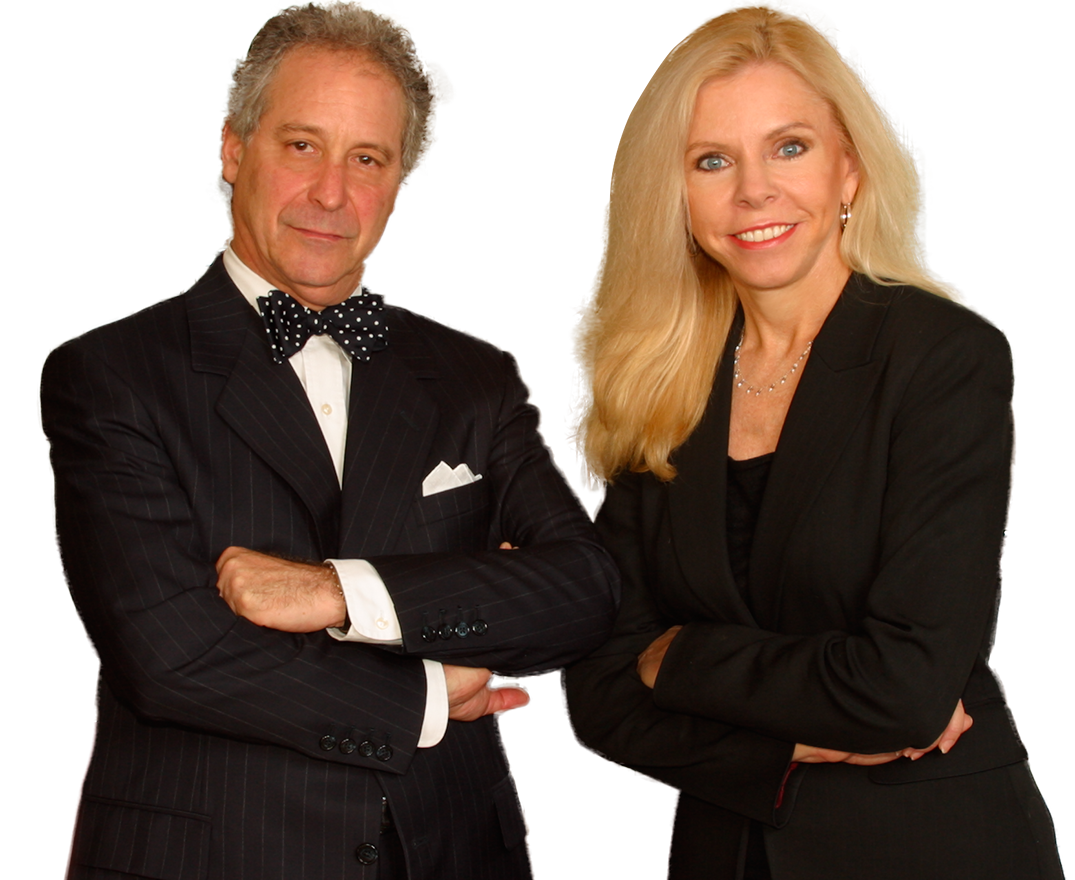
Robert & Susan Rosen have received an AV-Rating, the highest possible rating, based on legal ability and general ethical standards.

Rosen Law Firm. Top Listed in Best Lawyers. The Worlds Premier Guide

A Proud Member of INBLF. International Network of Boutique Law Firms

The American Trial Lawyers Association

The Best Lawyers in America
Contact our offices at 1-843-377-1700 or use our quick form below:

Bold labels are required.

Contact Information
disclaimer.

The use of the Internet or this form for communication with the firm or any individual member of the firm does not establish an attorney-client relationship. Confidential or time-sensitive information should not be sent through this form.

close

Office Location:

Rosen Law Firm, LLC The Peoples Building, 18 Broad Street, Suite 201 Charleston, SC 29401 Phone: 843-377-1700 Fax: 843-377-1709 - email usmap and directions